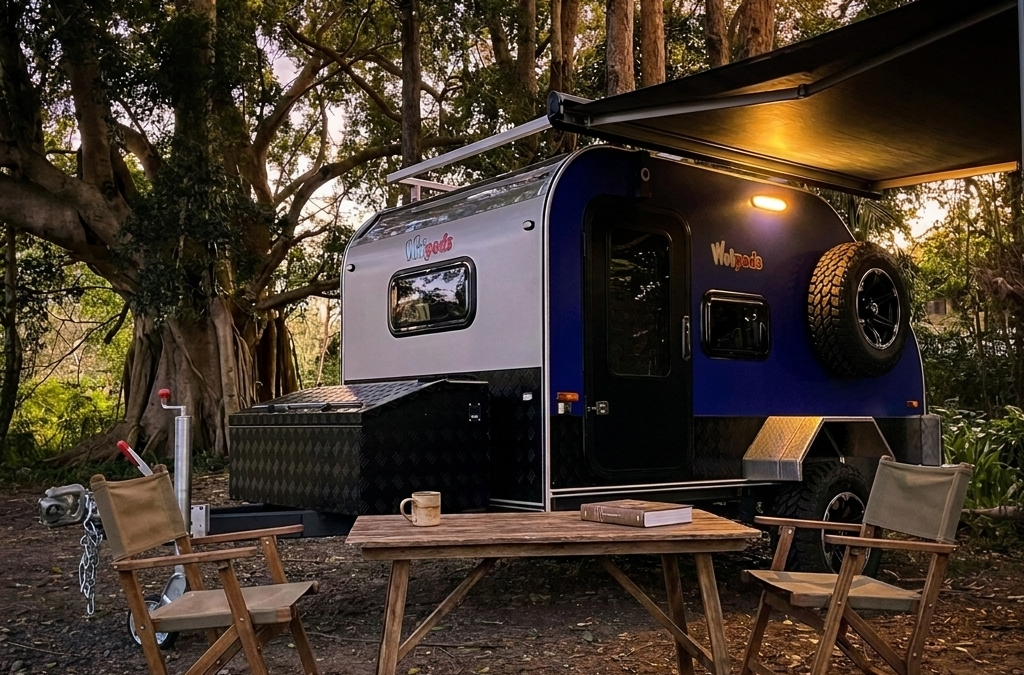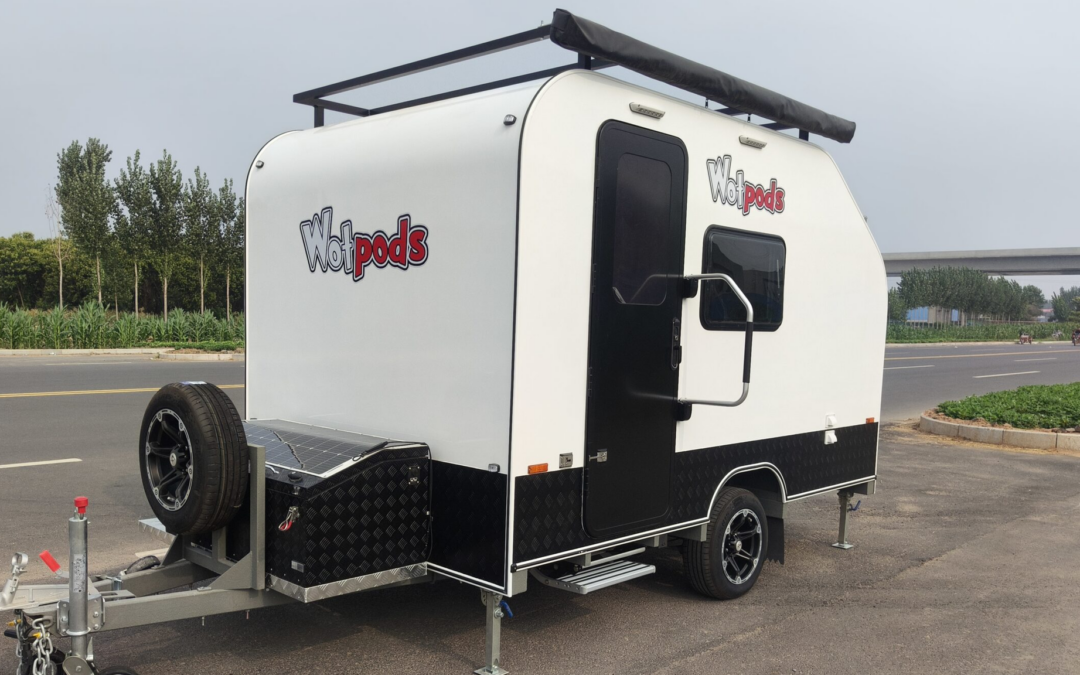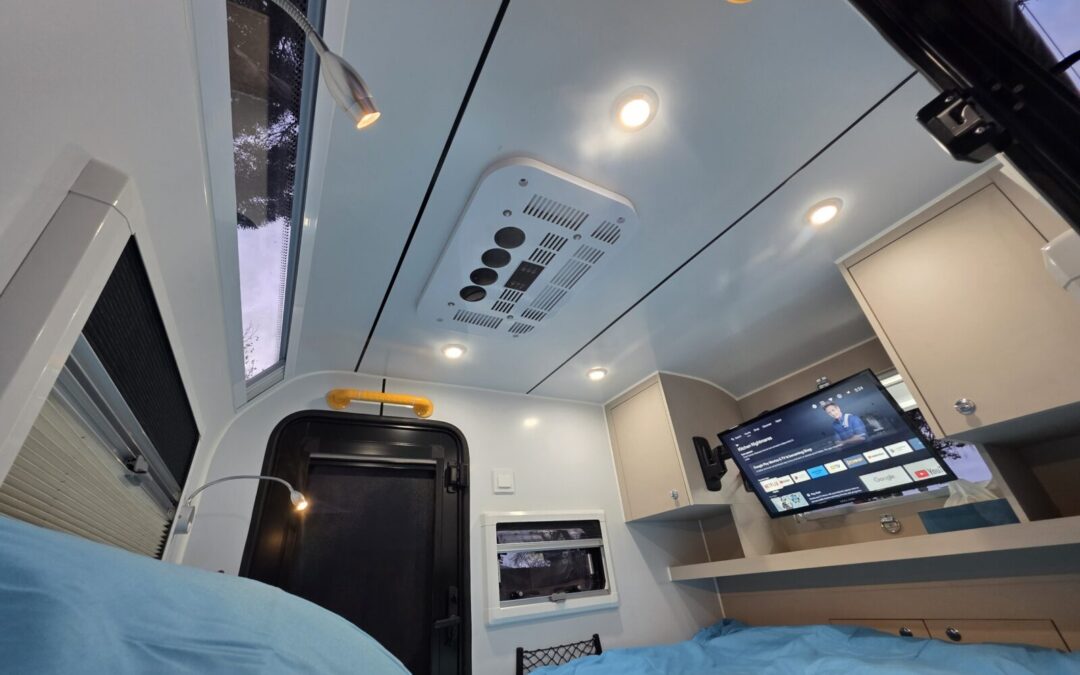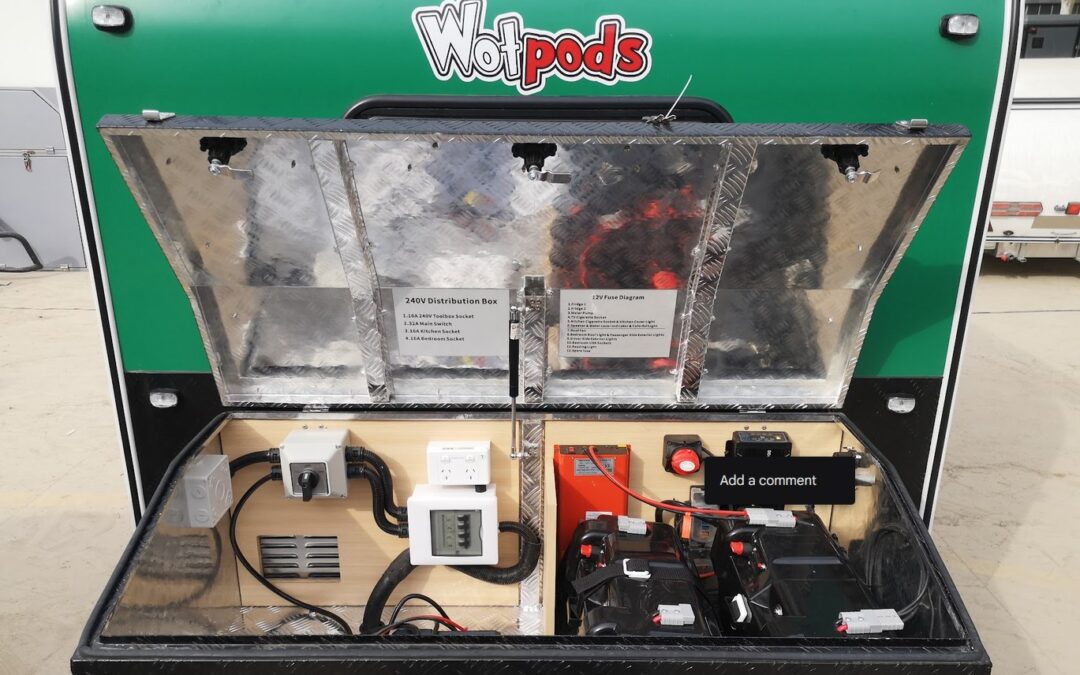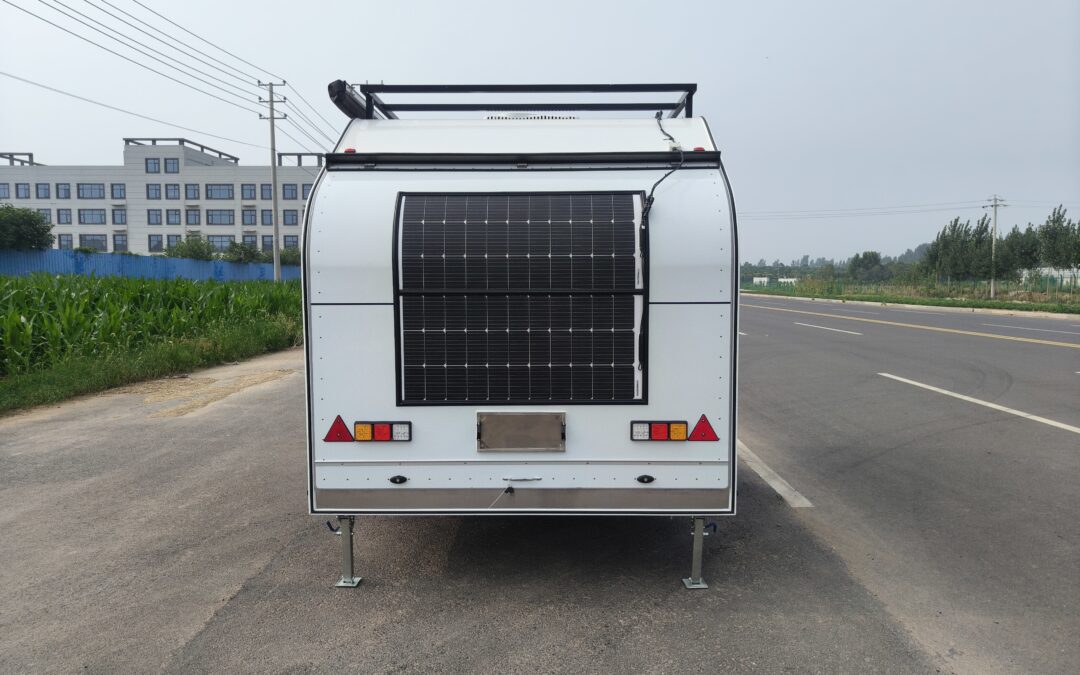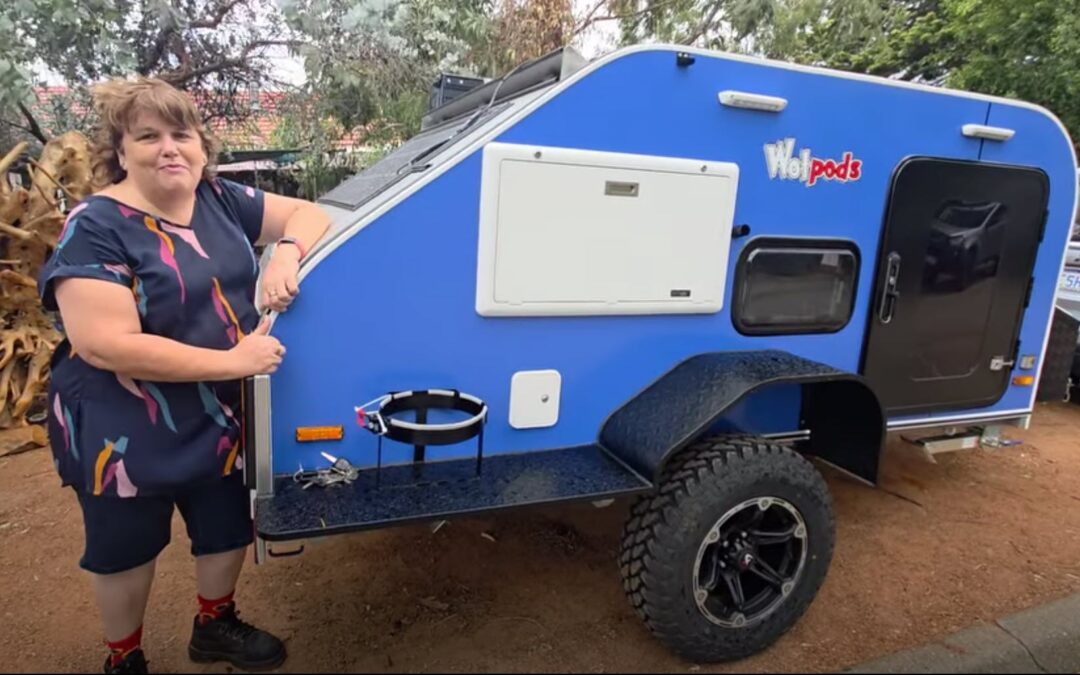
With a few of these off-the-shelf teardrops coming in from China with toilets/showers, we’ve been getting asked why our teardrops don’t have them. While we do have our Bosspod XL which has the toilet/shower inside, I’ve never been keen on the idea – at some stage you’ve got to swap home lifestyle for camping lifestyle I reckon.
If you are weighing up a toilet in teardrop caravan layouts, here’s the blunt truth – external toilets are usually the smarter option. For most buyers, especially couples and solo travellers chasing compact comfort, an internal loo sounds handy on paper but gives away too much valuable space, adds mess, and can make a small van feel even smaller.
That matters in a teardrop. Every centimetre has a job to do. Storage, sleeping comfort, battery space, fridge access, bench room, and an easy towing profile all count more in a compact caravan than they do in a full-sized van. So when buyers ask whether they need a toilet inside, the better question is this: what are you giving up to squeeze one in?
Why external toilets suit teardrop caravans better
A teardrop caravan works best when it stays true to its strength – compact, tow-friendly, simple, and fast to set up. An internal toilet pushes against all of that. You are carving out room for a feature that most travellers only use briefly, while sacrificing the space you live in all day and night.
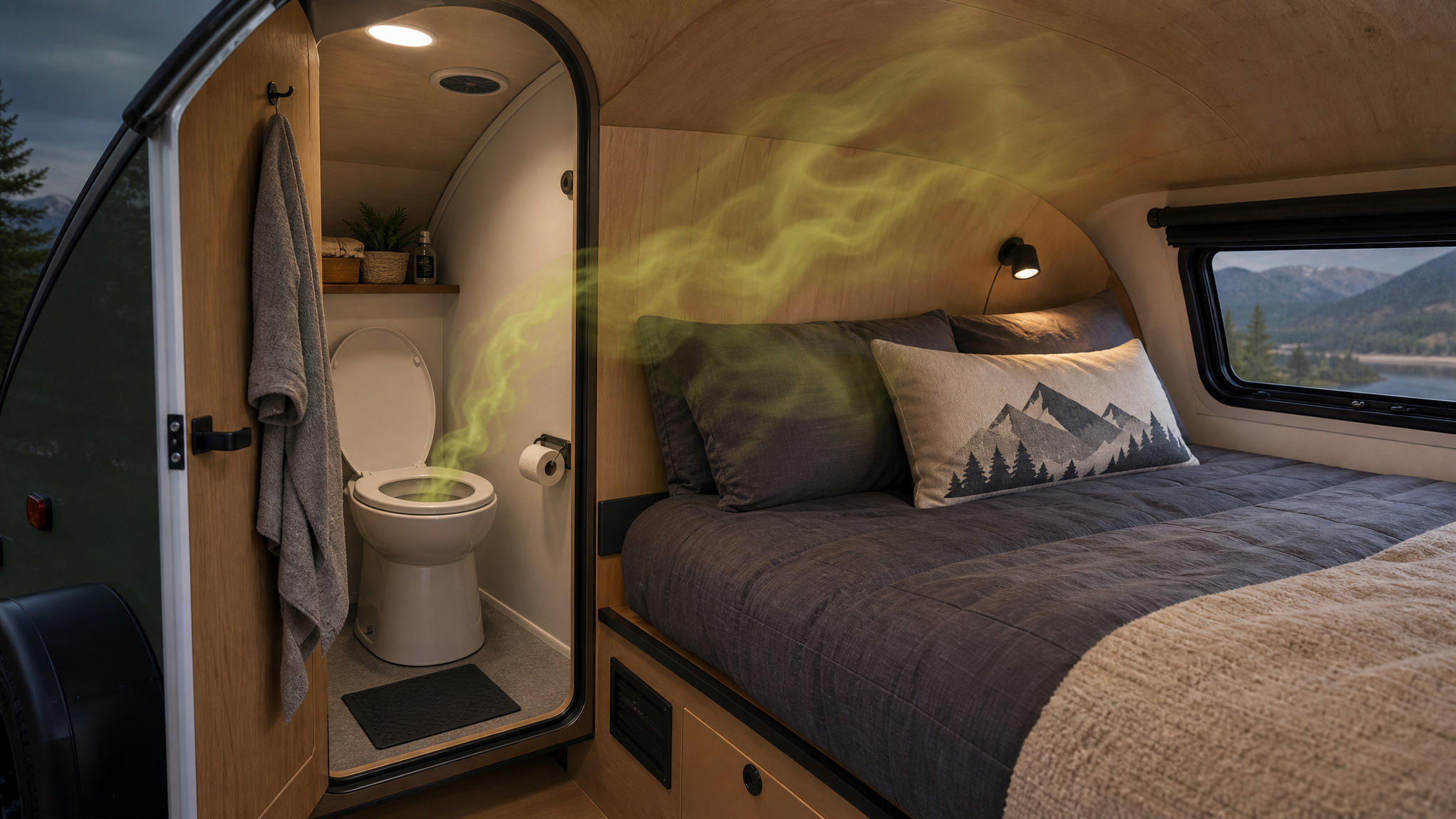
An external toilet setup, whether that means using campsite facilities, a portable privacy tent, or a well-planned touring routine, keeps the cabin cleaner and more open. It also means you are not sleeping a short distance from a waste cassette in a very small space. That is not a deal breaker for everyone, but it is a trade-off plenty of buyers regret once they have actually travelled with it.
The biggest reason – space is everything
In a larger caravan, an internal bathroom can be worth the footprint. In a teardrop, that same footprint hurts a lot more. To fit the toilet/shower in a teardrop, you’re camper height is now 2.4m+, meaning anyone with a 2.1m garage height limitation is out. You’re also now entering the higher wind-resistant models, ie moving from teardrop to caravan.
For many buyers, that is the wrong swap. A premium compact van should feel clever, not cramped. Keeping the layout free of a permanent toilet gives more room for the things you notice every day – a better mattress, more usable cabinetry, a cleaner interior look, and easier movement around the van.
Better hygiene, fewer smells, less hassle
This is the part people often gloss over when comparing specs. Internal toilets are not just about convenience. They also bring cleaning, emptying, odour control, ventilation, and chemical management into a tiny living space.
Even good systems need maintenance. If you mainly tour parks, stop at rest areas with amenities, or travel in regions with decent facilities, an internal toilet can become one more thing to clean and empty rather than one more thing making life easier. External options avoid that. Your sleeping area stays fresher, and your caravan is simpler to keep in top nick.
A lighter, simpler van is a better touring van
Teardrops shine because they are easier to tow than bigger caravans. Add an internal toilet setup and you are often adding weight, plumbing complexity, water demand, and more components that can need servicing later.
That is fine if the feature gets used constantly. But for many travellers, especially weekenders and touring couples, the usage just does not justify the compromise. A lighter setup helps with towability, fuel use, payload flexibility, and overall simplicity. That is a big win for buyers who want to get out there more often instead of managing extra systems.
Privacy can still be handled well outside
The argument for an internal toilet usually comes down to privacy and night-time convenience. Fair enough. But external toilet setups are not as rough-and-ready as people imagine. A quality privacy tent, a portable toilet, smart campsite selection, and a simple routine can solve the problem without permanently giving up interior space.
For many over-50 travellers, comfort matters, but so does practicality. If the van is easier to move in, easier to keep clean, and better set up for longer stays, that often feels like a better kind of comfort than having a tiny internal loo squeezed into the floorplan.
When an internal toilet might make sense
There are exceptions. If you free camp for long stretches well away from facilities, have medical needs, or know you will regularly need immediate overnight access, an internal toilet may still be worth considering. It is not wrong – it is just not automatically the best answer for this style of caravan.
The key is to think about how you actually travel, not how you imagine yourself travelling. Plenty of buyers picture remote, endless off-grid escapes, then spend most of their time doing weekends away, caravan parks, and popular touring routes. In that case, paying the space penalty for an internal toilet may not stack up.
The smarter buy for most teardrop owners
The best teardrop caravans are built around efficient design. They make you do stuff because they are easy to tow, easy to store, and quick to set up. That whole formula starts to slip when you overpack the layout with features that sound premium but chip away at the caravan’s real strengths.
That is why the toilet in teardrop caravan debate usually comes back to priorities. If you want maximum liveability, stronger storage, cleaner interiors, and a more practical compact touring setup, external toilets are better. They keep the van focused on what it does best – comfortable, clever adventures without the bulk and fuss of a bigger rig.
Before you lock in a layout, be ruthless about what you will actually use. In a compact caravan, every feature has to earn its place.