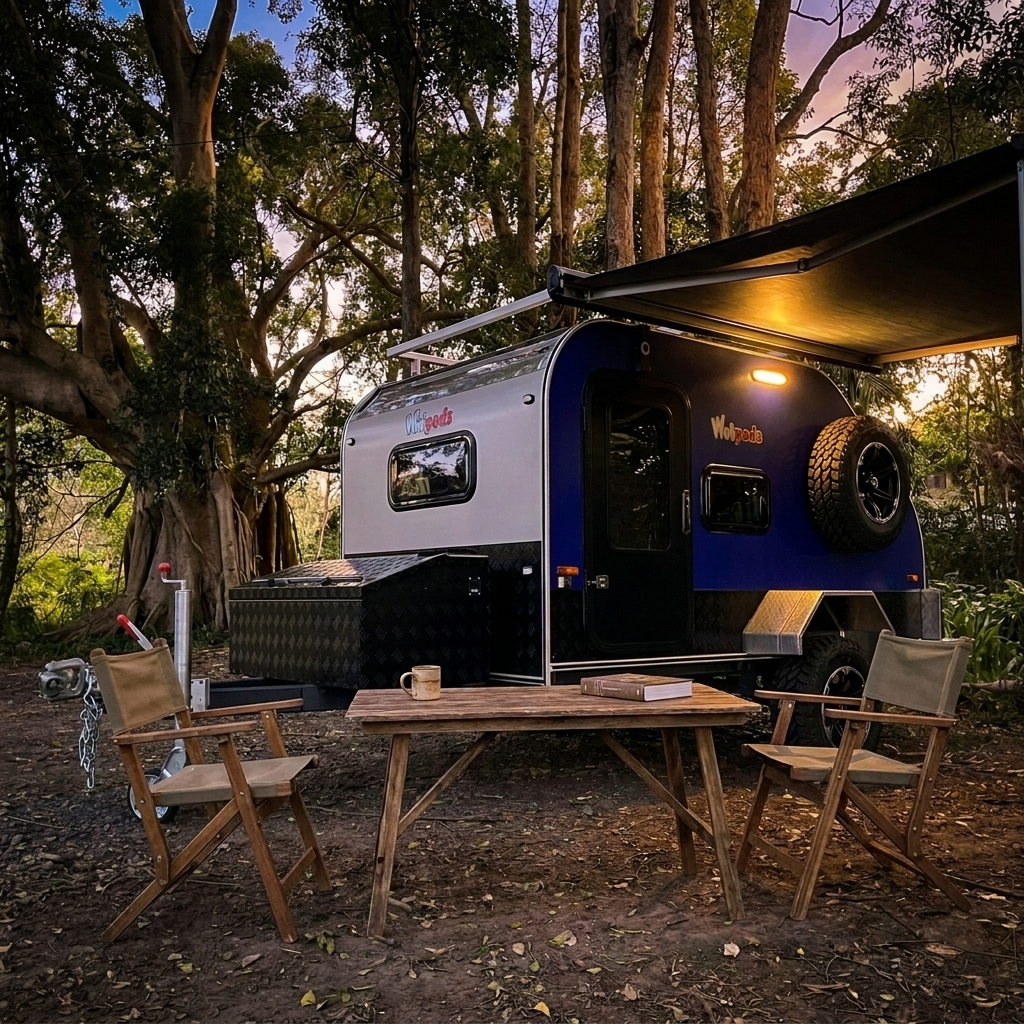
If you’ve started searching for a budget teardrop caravan, you’ve probably noticed two things: the prices swing wildly, and almost everyone claims theirs is the best value. Somewhere between a $17,000 pod and a $45,000 one sits the van that’s actually right for you — and the gap between a genuine bargain and a false economy isn’t the sticker price. It’s what’s underneath.
We build teardrops for a living, so we’ll be upfront: yes, one of the vans on this list is ours. But a roundup that pretends every competitor is rubbish isn’t worth reading, and you’d see through it anyway. So this guide does two things. First, it explains how to actually judge a budget teardrop — the stuff that separates a van you’ll love in five years from one you’ll regret in five months. Then it walks through the models genuinely worth a look in 2026, ours included, with the trade-offs laid out honestly.
What “budget” should and shouldn’t mean
A teardrop is one of the simplest ways to get off the ground and into the bush: a real bed, a kitchen, and off-grid power, all light enough to tow behind most SUVs and even some larger sedans. In 2026, the Australian market runs from roughly $17,000 to well over $50,000, and the entry-to-mid bracket — broadly $20,000 to $35,000 — is where most first-time buyers land.
Here’s the trap, though. “Budget” should mean you’re not paying for features you’ll never use. It should not mean you’re saving money by buying a van that’s built to a price in the places you can’t see. The cheapest van on a forecourt is often the most expensive one to own, once you factor in what fails and what you end up replacing.
So before the list, the part that actually matters.
How to judge a budget teardrop (the five things that count)
These are the things we’d check first if we were buying rather than building.
-
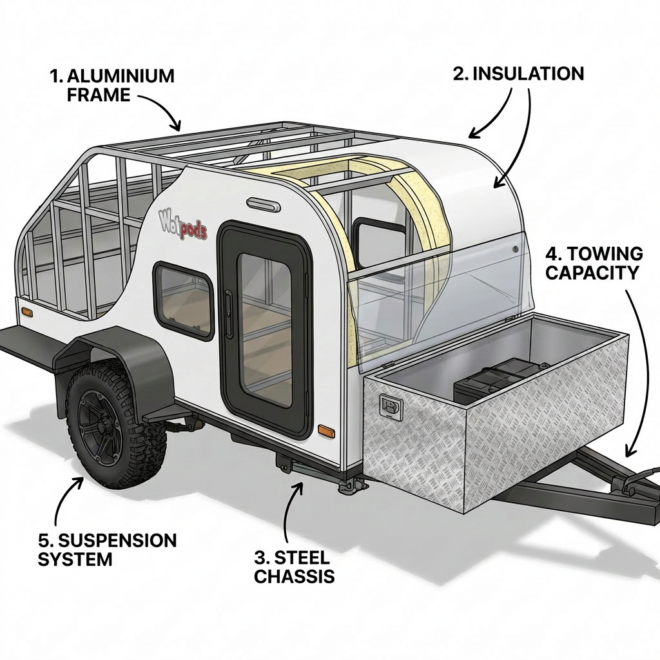
- The chassis. This is the spine of the van and the thing you can’t upgrade later. Look at the steel thickness. A lot of budget vans run a 2.5–3mm chassis; thicker (around 4mm) is stronger and more durable, particularly if you’ll ever leave the bitumen. Ask whether it’s hot-dipped galvanised — that’s what stops it rusting from the inside out over an Australian decade.
-
- The frame and panels. Timber frames are cheap and they rot if water ever gets in. A full aluminium cabin frame won’t. Likewise, composite or aluminium-composite panels handle moisture and heat better than budget particle-based alternatives. This is the single biggest hidden quality difference between two vans at the same price.
-
- Insulation — including the kitchen. Plenty of “insulated” vans insulate the sleeping cabin and stop there. In an Australian summer or an alpine winter, insulation throughout (kitchen included) is the difference between comfortable and miserable. Ask specifically.
-
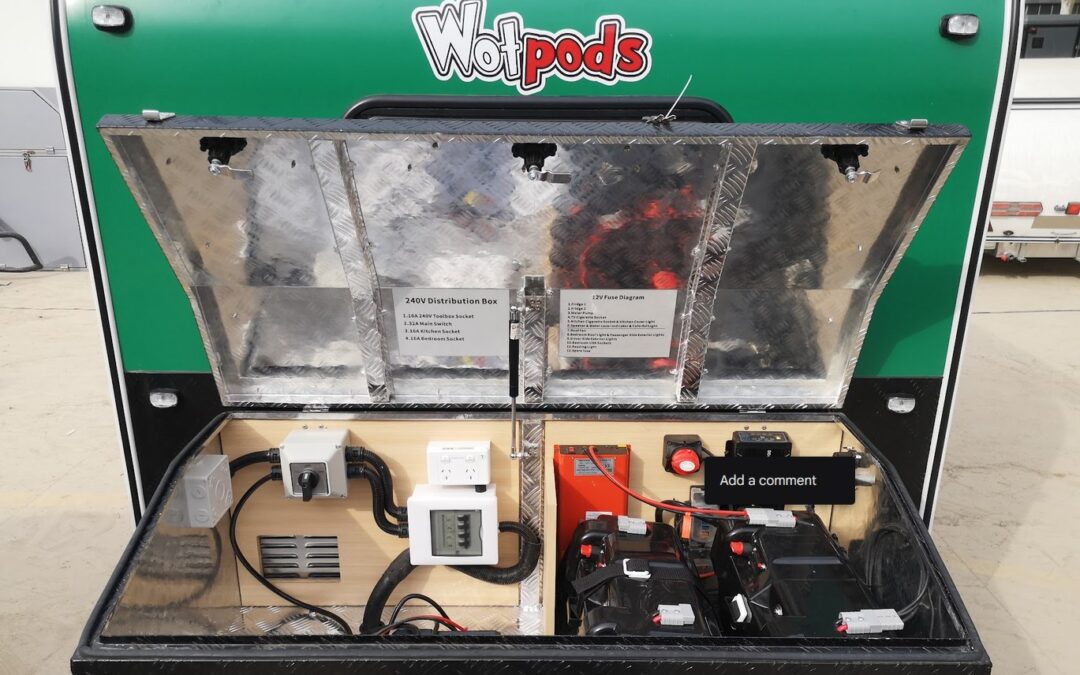
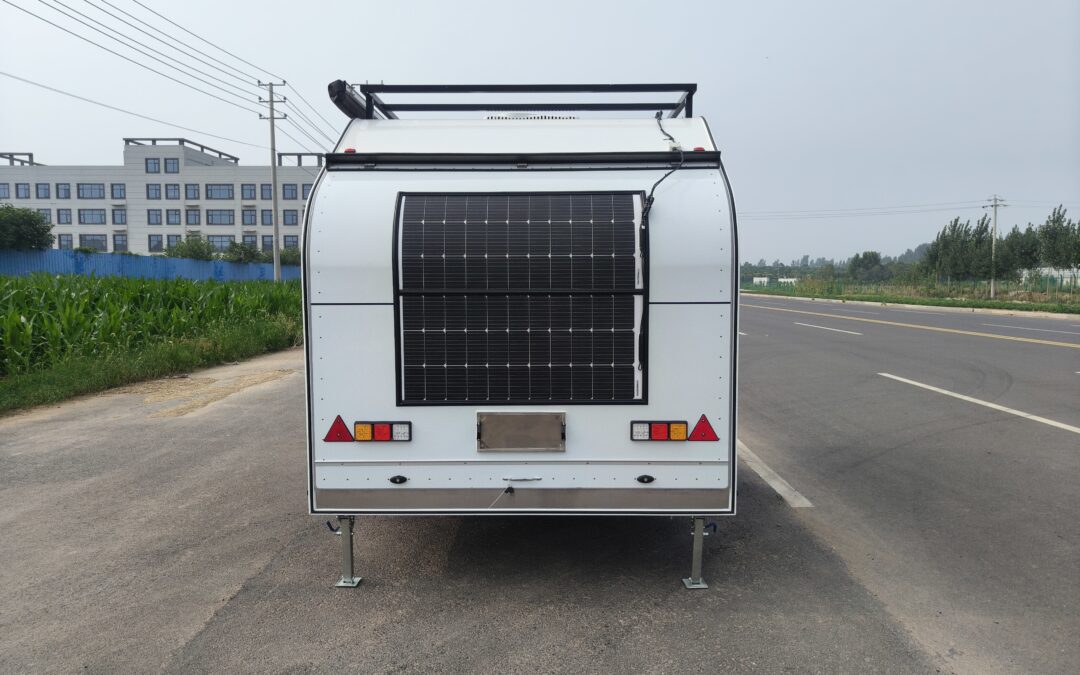
- Real off-grid capacity. Look past the word “solar” to the actual numbers: battery type and size (lithium with a BMS beats lead-acid comfortably), solar wattage, water tank capacity, and whether you can charge from the car as you drive. A 100ah battery and one panel is fine for weekends; serious off-grid touring wants 200ah-plus and 300w of solar.
- Weight vs. your tow vehicle. A teardrop’s whole appeal is that you don’t need a huge 4WD. Most sit between 750kg and 1,000kg Tare, towable by mid-size SUVs. Check your vehicle’s braked towing capacity before you fall in love with anything.
If you keep those five in mind, the price tag stops being the headline and starts being one factor among several. For a closer look at how these choices play out across different builds, our [model comparison] lays the specs out side by side.
The best budget teardrop caravans in Australia for 2026
With that framework in hand, here are the models worth shortlisting. Prices are starting points and move around — always confirm current drive-away pricing with the maker.
Wotpods Podaroo — from $24,000
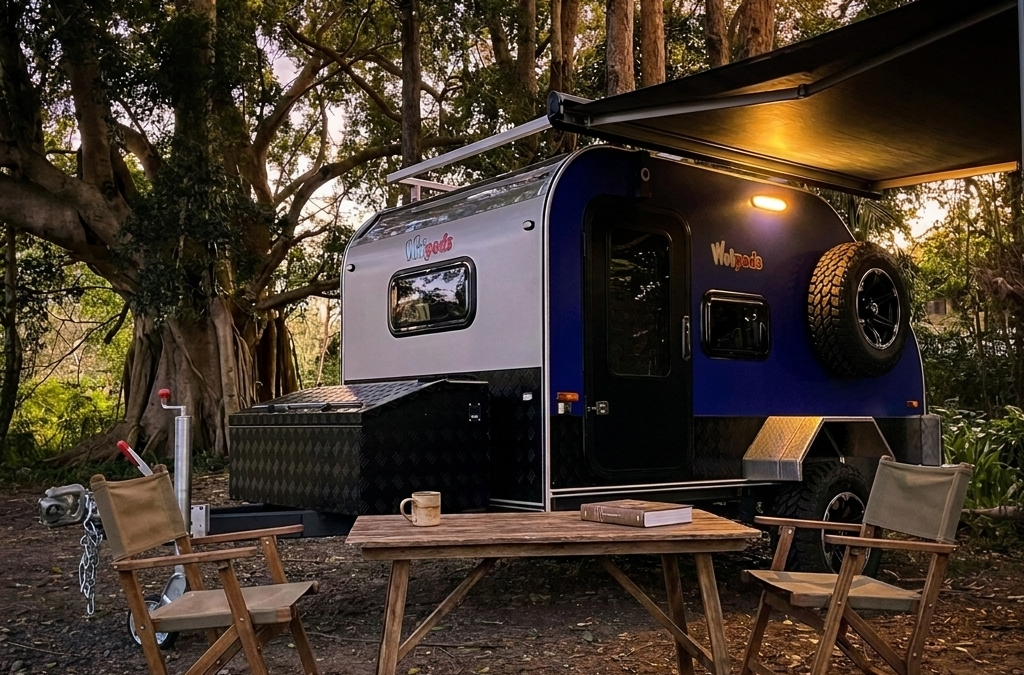
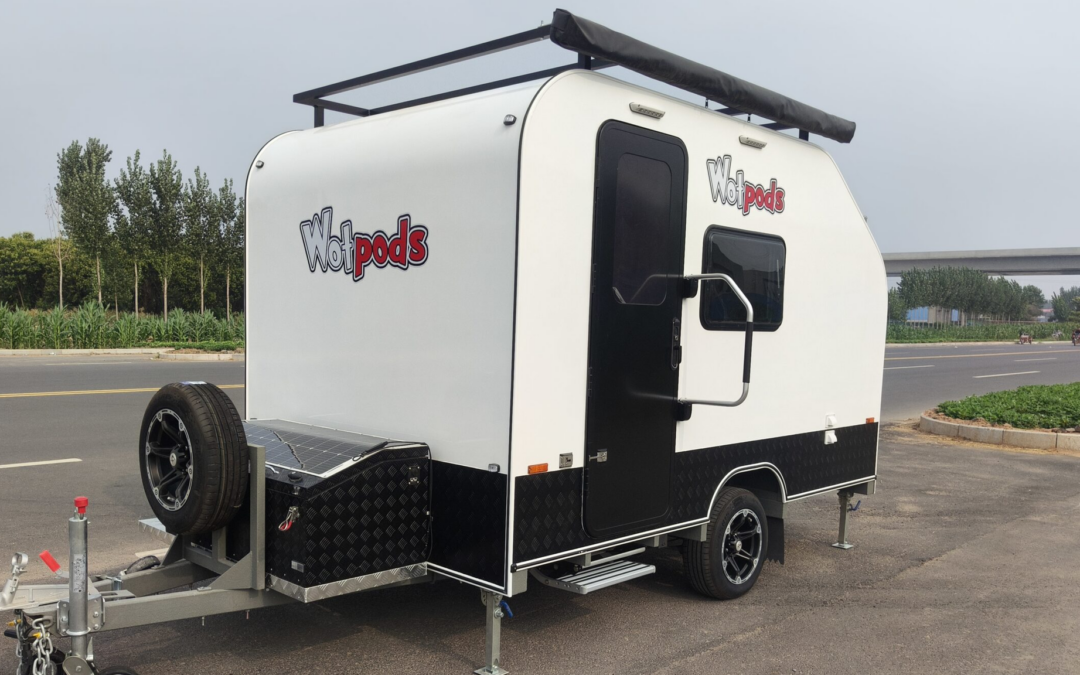
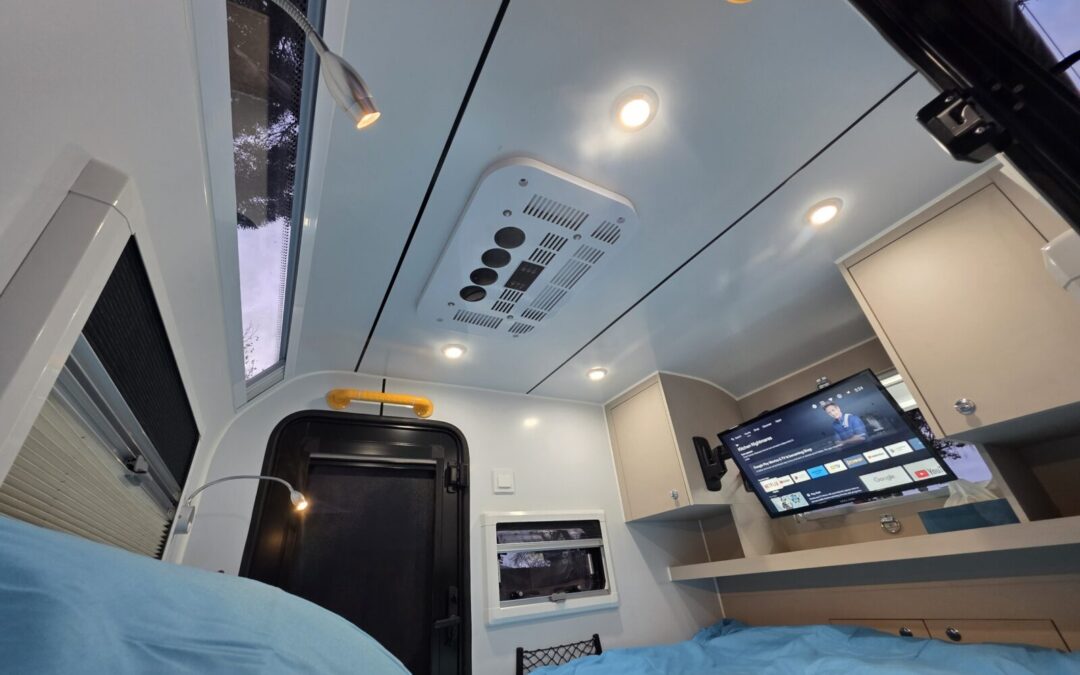
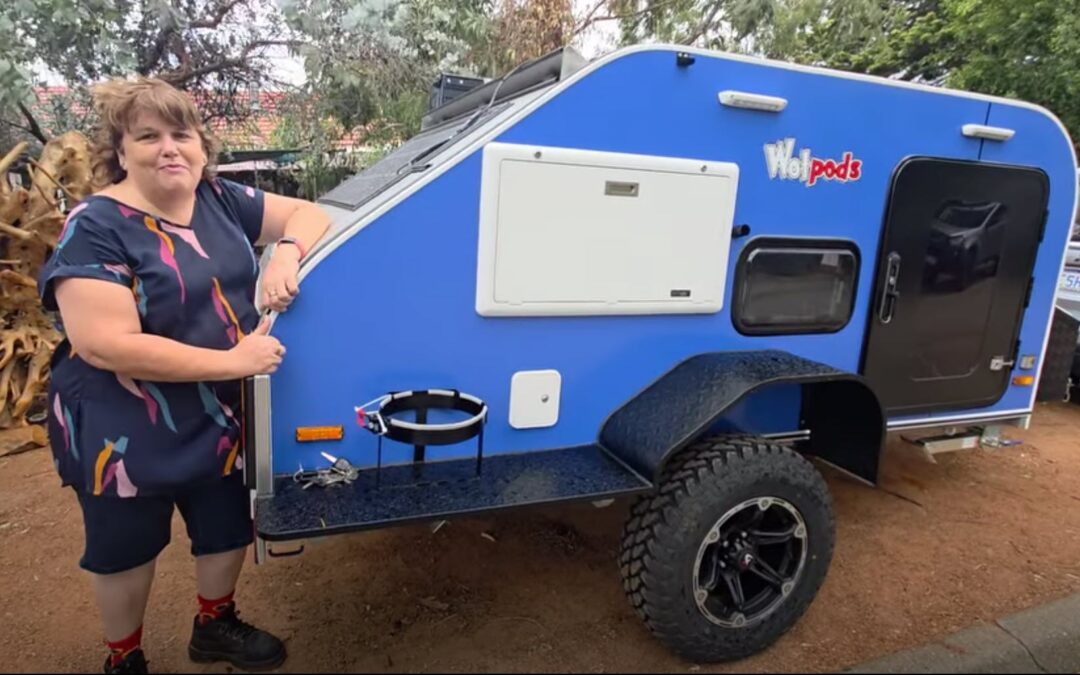
We’ll start with ours, since it’s what we know best. The Podaroo is our entry model and it’s built to the same bones as the rest of our range: a 4mm hot-dipped galvanised chassis, a full aluminium cabin frame, aluminium-composite panels inside and out, and insulation throughout including the kitchen. It’s the smallest of our three models — a genuine plus if garage space is tight — with a double bed, 100ah lithium battery and a solar panel as standard.
The honest part: at $24K it’s a true entry price, and it’s built à la carte, so you start with the basics and add only what you want (queen upgrade, more solar, awning, off-road pack). That keeps the entry cost low, but it also means a heavily optioned Podaroo climbs toward the next bracket — so compare like with like when you’re weighing it against a fully-loaded rival. Where it earns its place on this list is build quality at the entry point: you’re not trading away the chassis and frame to hit the price. See how it stacks up in our [3D builder]
Jayco J-Pod Outback — from around $24,000
The one everyone compares against, and for good reason. Jayco is the biggest RV name in the country, with a dealer network in every state and the resale confidence that comes with it. The J-Pod Outback starts in the same ballpark as the Podaroo — reviewers have tested it around $23,990 — and most SUVs will tow its sub-1,000kg Tare without breaking a sweat.
The honest part: the J-Pod is “barely teardrop-shaped,” as one reviewer put it, and crucially it doesn’t have the rear galley kitchen that defines a classic teardrop — it’s closer to a compact camper than a true teardrop. If brand reach and resale matter most to you, it’s a strong pick. If you specifically want the teardrop layout with a proper rear kitchen, look closely before you commit.
Gidget Retro Teardrop — design-led, check current availability
Gidget deserves a mention purely on design. The Australian-made Gidget pioneered a patented slide-out module that nearly doubles the cabin space, fitting a queen bed and a small lounge in a van that tows tiny. For sheer clever use of space, few budget teardrops match it.
The honest part: Gidget went into voluntary administration in 2018, and current production and pricing should be verified directly before you get your hopes up. It’s also worth watching the used market, where well-kept Gidgets occasionally appear.
Small-batch makers — Cool Beans, Smidge, Travelbug
Beyond the big names, Australia has a handful of genuine small-batch builders worth a look if you want something more custom or more characterful: Cool Beans (handmade in WA), Smidge (built by Suncamper Motorhomes), and Travelbug (family-run, Darling Downs) among them. Build quality and lead times vary, so apply the five-point framework above and ask hard questions — but don’t overlook them just because the brand is small.
The used market — from around $10,000
A used teardrop is a legitimate budget route. Listings on the major classifieds run from about $10,000 for older builds up to the low $20,000s for near-new examples. The catch is that you inherit whatever the previous owner did or didn’t maintain — so the chassis, frame and water-ingress checks from our framework matter even more on a second-hand van.
So which is the best budget teardrop?
There isn’t a single answer, and anyone who gives you one is selling something. The “best” budget teardrop is the one that scores well on the five things that count and fits how you actually camp.
If brand network and resale top your list, the J-Pod is hard to ignore. If clever space-saving design excites you, Gidget is worth chasing down. If you want entry-level pricing without compromising on the chassis and frame you can’t upgrade later, that’s exactly the gap we built the Podaroo to fill. The smart move is to shortlist two or three, get real drive-away quotes, and compare them feature-for-feature rather than headline-price to headline-price.
Frequently asked questions
What is the best budget teardrop caravan in Australia in 2026?
There’s no single best — it depends on how you camp. The strongest budget contenders under about $35,000 include the Wotpods Podaroo (from $24K, strong build quality at entry price), the Jayco J-Pod Outback (from around $24K, unmatched brand network and resale, though not a true rear-kitchen teardrop), and design-led options like Gidget. The best choice is the one that scores well on chassis, frame, insulation, off-grid capacity and weight while suiting your travel style.
How much does a budget teardrop caravan cost in Australia?
In 2026, new teardrops generally start around $17,000–$24,000 for entry models and rise to $35,000-plus for well-equipped or off-road builds. The broad $20,000–$35,000 bracket is where most first-time buyers shop. Used teardrops start from around $10,000. Remember that à-la-carte models start low but climb as you add options, so compare fully-specced prices, not just entry prices.
What should I look for in a cheap teardrop camper?
Focus on the things you can’t upgrade later: chassis thickness (around 4mm and hot-dipped galvanised is stronger than the 2.5–3mm budget norm), a rot-proof aluminium frame, composite panels, insulation throughout including the kitchen, and genuine off-grid capacity (lithium battery size, solar wattage, water capacity). A cheap van that cuts corners on the chassis or frame is usually the most expensive one to own over time.
Can I tow a teardrop caravan with a normal car?
Usually, yes. Most teardrops weigh between roughly 750kg and 1,000kg Tare, which is within the braked towing capacity of many mid-size SUVs and some larger sedans. Always check your specific vehicle’s braked towing capacity against the van’s ATM (not just its Tare) before buying.
Is it better to buy new or used for a budget teardrop?
Both work. New gives you warranty, current battery and solar tech, and the ability to spec it to your needs. Used can be excellent value from around $10,000, but you inherit the previous owner’s maintenance, so inspect the chassis, frame and any sign of water ingress carefully. Either way, the same quality framework applies.
See how the Podaroo compares
The best way to judge any teardrop is feature-for-feature, against the five things that actually matter. We’ve laid the Podaroo’s specs out in full so you can do exactly that — chassis, frame, insulation, power and all — and stack it against whatever else is on your shortlist.
Take a look at the full model comparison, build your own and get an instant quote in the 3D builder, or get in touch if you’d like to talk it through. No pressure — just the detail you need to make a good call.
Prices and specifications mentioned are starting points current at the time of writing and may change; always confirm current drive-away pricing and specifications directly with each manufacturer before purchasing.